

Product Categories
SEARCH WHAT YOU WANT
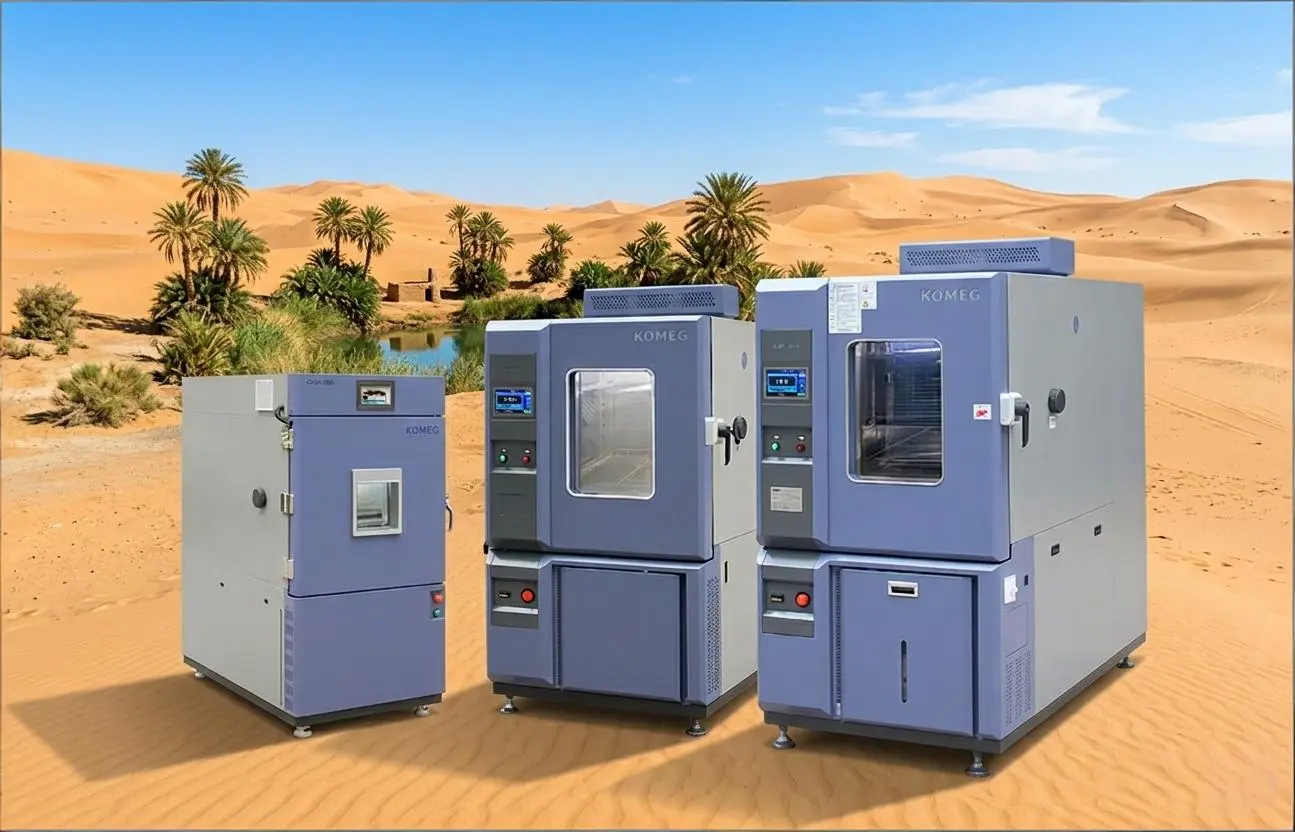
Environmental testing plays a vital role in modern product development. Whether you're validating an electric vehicle battery, qualifying aerospace components, testing semiconductor devices, or verifying the durability of consumer electronics, selecting the right environmental test chamber is essential for generating accurate, repeatable, and meaningful test results.
However, choosing the right chamber is not simply a matter of selecting a temperature range or chamber size. Different products face different environmental challenges, and the wrong equipment can lead to inefficient testing, increased operating costs, or unreliable results.
This guide explains the key factors to consider when selecting an environmental test chamber and helps you identify the solution that best matches your application.
Environmental test chambers recreate controlled conditions such as temperature, humidity, thermal cycling, or other environmental stresses to evaluate how products perform throughout their lifecycle.
These chambers help manufacturers:
As industries continue to adopt more advanced materials and compact electronic systems, environmental testing has become an indispensable part of product qualification.
The first step in choosing an environmental chamber is understanding what you need to test.
Ask yourself:
Clear testing objectives make it much easier to identify the appropriate chamber type.
Different products require different environmental simulations.
If your goal is to evaluate product performance under extreme heat or cold, a Temperature Test Chamber is usually sufficient.
Typical applications include:
Typical temperature ranges include:
Many products are affected by both heat and moisture.
A Temperature and Humidity Chamber is ideal for evaluating:
Common test conditions include:
Products such as automotive electronics, batteries, and semiconductors often experience sudden temperature changes during normal operation.
A Rapid Rate Thermal Cycle Chamber provides fast heating and cooling rates to accelerate fatigue and identify latent defects.
These chambers are commonly used for:
Unlike thermal cycling, Thermal Shock Chambers transfer products almost instantly between hot and cold zones, creating extreme thermal stress.
Typical applications include:
Large products require larger testing spaces.
Walk-in chambers are commonly used for:
Many buyers choose a chamber based only on the current sample size, overlooking future testing needs.
A chamber should provide adequate airflow around the test specimen. Overloading the workspace can affect temperature uniformity and reduce testing accuracy.
Consider:
Choosing the right size today can save high costs later.
Not all chambers deliver the same performance.
Important specifications include:
Select a chamber that comfortably covers your testing requirements rather than operating continuously at its limits.
Uniform temperature throughout the workspace ensures every sample experiences identical conditions.
Poor uniformity can produce inconsistent results.
Stable temperature control improves repeatability and test reliability.
Look for chambers with precise PID control systems and optimized airflow design.
Fast temperature transitions reduce overall testing time and increase laboratory productivity.
High-performance chambers may offer programmable linear or non-linear temperature ramp rates depending on the application.
If humidity testing is required, pay close attention to:
Accurate humidity control is particularly important for electronics, semiconductor packaging, and medical devices.
Standard chambers are suitable for many applications, but increasingly complex products often require customized solutions.
Consider whether the manufacturer can provide:
Choosing a manufacturer with strong customization capabilities can significantly improve testing efficiency.
Environmental chambers often operate continuously, making energy consumption an important consideration.
Modern systems may include:
Some manufacturers now offer CO₂ refrigeration systems (R744) with a Global Warming Potential (GWP) of just 1, providing an environmentally friendly alternative to traditional refrigerants while supporting long-term sustainability goals.
Environmental chambers frequently operate at extreme temperatures.
A high-quality chamber should include comprehensive safety protection such as:
These systems help protect both operators and valuable test samples.
An environmental chamber is a long-term investment, so after-sales support is just as important as technical performance.
Look for manufacturers that provide:
Reliable support minimizes downtime and extends equipment lifespan.
Environmental test chambers are widely used across multiple industries:
Modern products are becoming larger, smarter, and more complex. As a result, many companies require testing solutions that go beyond standard chamber configurations.
Manufacturers with strong engineering capabilities can develop customized systems tailored to specific applications, including:
Customized solutions improve testing efficiency, reduce unnecessary operating costs, and better reflect real-world operating conditions.
When selecting an environmental test chamber supplier, reliability, flexibility, and long-term support are just as important as technical specifications.
KOMEG has become a trusted partner for manufacturers worldwide by offering a comprehensive range of environmental testing solutions, including temperature chambers, temperature and humidity chambers, rapid rate thermal cycle chambers, walk-in chambers, ESS chambers, thermal shock chambers, battery testing chambers, HAST chambers, and advanced CO₂ refrigeration systems.
Beyond its extensive product portfolio, KOMEG is recognized for:
Whether you're testing automotive components, batteries, semiconductors, aerospace equipment, or industrial electronics, KOMEG provides tailored solutions designed to meet evolving reliability testing requirements.
Choosing the right environmental test chamber is about matching your testing objectives with the right technology—not simply selecting the largest chamber or the widest temperature range.
By carefully evaluating factors such as environmental conditions, chamber performance, customization options, energy efficiency, safety features, and manufacturer support, you can make an informed investment that improves testing accuracy, accelerates product development, and enhances long-term product reliability.
As testing requirements continue to evolve, partnering with an experienced manufacturer that offers both standard and customized environmental testing solutions can provide significant advantages. Whether you're establishing a new laboratory or upgrading existing equipment, selecting the right environmental test chamber is a critical step toward ensuring product quality and long-term success.
An environmental test chamber simulates controlled conditions such as temperature, humidity, and thermal cycling to evaluate product performance, durability, and reliability before products are released to the market.
Start by defining your testing objectives, required environmental conditions, chamber size, temperature range, and any customization needs. Also consider energy efficiency, safety features, and the manufacturer's technical support.
A temperature chamber controls only temperature, while a temperature & humidity chamber regulates both temperature and relative humidity. The latter is ideal for testing moisture-sensitive products such as electronics, PCBs, and medical devices.
Rapid rate thermal cycle chambers are suitable for products that experience frequent or rapid temperature changes, including automotive electronics, batteries, semiconductors, and aerospace components. They help accelerate fatigue testing and reveal latent defects more quickly.
Customized chambers can be tailored to specific products, testing standards, and laboratory layouts. Features such as custom dimensions, cable ports, automation interfaces, and specialized fixtures improve testing efficiency and better replicate real-world operating conditions.
Product Categories
Recent Posts
Copyright © 2026 GUANGDONG KOMEG INDUSTRIAL CO., LTD