

Product Categories
SEARCH WHAT YOU WANT
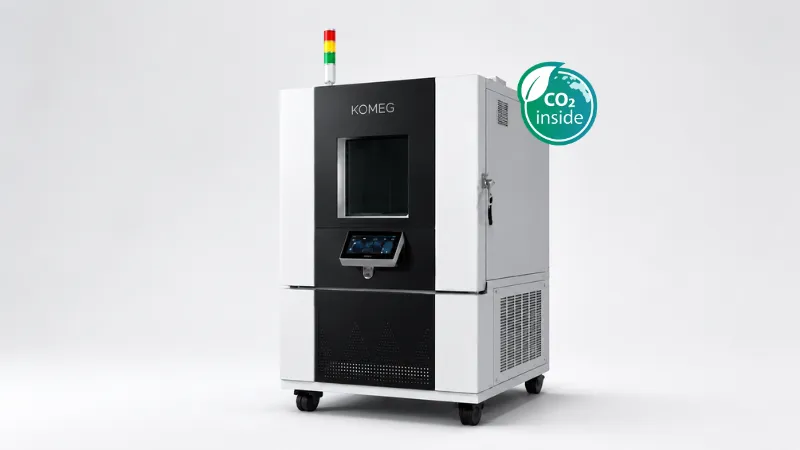
An environmental test chamber is used to simulate controlled environmental conditions so engineers can evaluate how a product, material, component, or assembly performs under temperature, humidity, and other environmental stresses. Rather than waiting for a product to experience years of real-world exposure, controlled laboratory testing allows potential weaknesses to be identified much earlier in the development and validation process.
The main purpose of an environmental test chamber is therefore not simply to make a product hot or cold. Its real value lies in creating repeatable and measurable environmental conditions that help engineers understand product reliability, identify failure mechanisms, verify design performance, and determine whether a product can withstand the conditions it is expected to encounter throughout its service life.
For manufacturers in industries such as automotive electronics, semiconductors, optical communications, batteries, aerospace, and consumer electronics, environmental testing has become an important part of product development and quality assurance. A well-designed environmental testing program can reveal problems before products reach customers, reducing the risk of field failures, warranty costs, product recalls, and unexpected maintenance.
The primary purpose of an environmental test chamber is to expose products to controlled environmental stresses and observe their performance, durability, and reliability.
Products rarely operate under constant laboratory conditions. Electronic devices may experience repeated temperature changes during daily operation. Automotive components can be exposed to severe temperature differences, humidity, vibration, and outdoor environments. Optical communication equipment may need to maintain stable optical performance while operating across a wide temperature range. Battery systems can experience significant thermal changes during charging, discharging, transportation, and storage.
An environmental test chamber allows these conditions to be reproduced in a controlled environment. Engineers can define the temperature range, humidity level, exposure time, cycling profile, and other test conditions according to the product's intended application or applicable testing standard.
This controlled approach makes it possible to compare different designs, materials, components, and manufacturing processes under consistent conditions.
One of the most important purposes of environmental testing is to accelerate the discovery of potential defects.
A product may appear to work normally during initial functional testing while still containing weaknesses that only become visible after repeated environmental exposure. Thermal expansion and contraction, moisture absorption, material aging, solder fatigue, corrosion, and interface degradation can gradually affect product performance.
Environmental chambers allow engineers to apply these stresses under controlled laboratory conditions instead of waiting for failures to appear naturally in the field.
For example, repeated temperature cycling can cause different materials within an electronic assembly to expand and contract at different rates. Over many cycles, this mechanical stress may contribute to solder joint fatigue, PCB cracking, component connection problems, or package degradation.
Similarly, temperature and humidity exposure can accelerate moisture-related degradation in materials and electronic assemblies. By identifying these problems during development, manufacturers can modify materials, structures, manufacturing processes, or protective measures before mass production.
This is particularly important for products with long service lives or high failure costs.
Environmental testing is also widely used to verify whether products meet applicable industry or customer requirements.
Different industries have different environmental testing requirements. Depending on the product and application, engineers may need to consider standards such as IEC 60068, MIL-STD-810, Telcordia GR-468, AEC-Q100, or other customer-specific qualification procedures.
These standards can define environmental conditions, test durations, temperature profiles, humidity exposure, recovery procedures, and other testing requirements.
An environmental test chamber provides the controlled physical environment required to perform these tests consistently. However, selecting a chamber based only on its temperature range is not enough. The equipment must also be capable of maintaining the required stability, uniformity, transition rate, humidity conditions, and test duration.
For this reason, engineers should first identify the actual test profile and applicable standard before selecting equipment.
Temperature changes can create mechanical stress inside a product, especially when different materials have different coefficients of thermal expansion.
An electronic assembly, for example, may contain semiconductor packages, copper traces, solder joints, PCB materials, adhesives, housings, and other components. These materials do not necessarily expand and contract at the same rate when temperature changes.
During repeated thermal cycling, these differences can generate mechanical stress at interfaces and connections.
This is one reason thermal cycling is widely used for reliability validation. The objective is not simply to determine whether a product can survive a particular high or low temperature. Engineers also want to understand how the product behaves when environmental conditions repeatedly change.
For applications requiring more aggressive thermal stress, rapid temperature change testing can be used to increase the rate of environmental transitions and accelerate the identification of latent defects.
Environmental chambers are also valuable during the research and development stage.
Before a product design is finalized, engineers may need to compare different materials, adhesives, coatings, electronic components, packaging structures, or manufacturing processes. Environmental testing provides a controlled method for evaluating these alternatives.
For example, two materials may show similar performance under normal laboratory conditions but behave very differently after prolonged exposure to high temperature and humidity. Likewise, two packaging designs may have similar initial performance but different responses to repeated thermal cycling.
By testing these alternatives at an early stage, engineering teams can make better design decisions before committing to large-scale production.
This makes environmental testing more than a final quality-control procedure. It can also be a design-development tool that helps engineers improve product reliability from the beginning.
The main purpose of an environmental test chamber remains the same across industries: reproduce environmental stresses and evaluate product performance. However, the specific testing requirements can vary significantly depending on the application.
High-speed optical communication products are becoming increasingly sensitive to environmental conditions as optical transceivers, silicon photonics, and Co-Packaged Optics continue to evolve.
Optical modules and photonic components may need to maintain stable optical performance across a wide temperature range. Thermal stress can contribute to optical alignment drift, package deformation, solder fatigue, and changes in optical performance.
Environmental testing can therefore be used to evaluate optical transceivers, active optical components, CPO packages, fiber-optic assemblies, and semiconductor-related products under controlled temperature and humidity conditions.
For high-speed optical products, environmental testing may also be combined with external optical monitoring equipment to observe changes in optical power, wavelength, or other performance parameters during testing.
Automotive components must operate under considerably more demanding environmental conditions than many conventional electronic products.
Electronic control units, sensors, power electronics, battery management systems, displays, and other vehicle components may experience large temperature variations throughout their service life.
Environmental testing helps manufacturers evaluate how these components respond to low-temperature exposure, high-temperature exposure, temperature cycling, and humidity conditions.
For electric vehicle and battery applications, environmental testing can also support reliability evaluation of battery-related components and systems under controlled thermal conditions.
Consumer electronics contain increasingly dense electronic assemblies, making thermal and moisture-related reliability increasingly important.
PCB assemblies may experience repeated temperature changes during operation, transportation, storage, and environmental exposure. Moisture can also contribute to corrosion, insulation degradation, electrical leakage, and other failure mechanisms.
Environmental chambers allow manufacturers to evaluate these effects under repeatable conditions before products enter mass production.
Aerospace and defense equipment may be exposed to extreme environmental conditions during transportation, operation, storage, and deployment.
Depending on the application, environmental qualification can involve temperature extremes, temperature cycling, humidity, altitude, and other environmental stresses.
Environmental chambers provide a controlled laboratory environment for reproducing specific conditions and evaluating whether critical equipment can maintain reliable performance.
Different environmental test methods are designed to investigate different failure mechanisms. Selecting the appropriate test depends on the product, intended application, applicable standard, and reliability objective.
Constant temperature and humidity testing exposes a product to a controlled combination of temperature and relative humidity for a defined period.
This type of testing is commonly used to evaluate long-term stability, moisture resistance, material degradation, corrosion susceptibility, and other humidity-related effects.
It is particularly useful when the product is expected to operate or remain in storage under warm and humid conditions.
Rapid temperature cycling applies controlled temperature transitions at significantly higher rates than conventional temperature chambers.
This approach is commonly associated with environmental stress screening and accelerated reliability testing. Rapid temperature transitions can increase thermal stress within assemblies and help expose latent defects that may not become apparent during conventional temperature soaking.
KOMEG provides rapid temperature change chambers designed for applications requiring controlled and repeatable thermal transition rates. Depending on the test requirement, chamber configurations can be developed around factors such as temperature range, ramp rate, sample thermal mass, and active heat load.
For engineers working with electronics, semiconductor devices, automotive components, optical modules, and other products sensitive to thermal stress, these factors are important when determining the appropriate chamber configuration.
Thermal shock testing is designed to expose products to rapid transitions between distinctly different temperature environments.
Compared with conventional temperature cycling, thermal shock testing can create a more abrupt thermal transition and therefore a different type of mechanical stress.
Thermal shock chambers are commonly used when the objective is to investigate the effects of rapid temperature changes on materials, components, assemblies, and finished products.
Choosing an environmental test chamber should begin with the testing requirement rather than the equipment itself.
The first consideration is the required temperature range. Engineers should determine the lowest and highest temperatures required by the test profile rather than selecting a chamber based simply on its maximum advertised range.
The second consideration is whether humidity control is required. If the test involves damp heat, constant temperature and humidity, or temperature-humidity cycling, the chamber must provide the appropriate humidity control capability.
Ramp rate is another important factor. A standard temperature chamber may be suitable for temperature soaking and general environmental exposure, while applications involving accelerated thermal stress may require a rapid temperature change chamber.
Sample size and thermal mass should also be considered. A chamber's empty-chamber performance does not necessarily represent its performance under actual test conditions. Large metal fixtures, powered electronic devices, batteries, or other high-thermal-mass samples can significantly affect heating and cooling performance.
Finally, engineers should consider monitoring and communication requirements. Modern reliability laboratories may need data logging, remote monitoring, LAN or serial communication, cable feedthroughs, and integration with external measurement equipment.
KOMEG develops environmental test chambers for a wide range of reliability testing and product validation applications.
Its product portfolio covers temperature and humidity test chambers, rapid temperature change chambers, thermal shock chambers, battery testing chambers, HAST chambers, walk-in environmental chambers, and customized environmental testing solutions.
For standard environmental exposure and temperature testing, KOMEG temperature test chambers provide controlled thermal conditions for products, components, materials, and assemblies.
For applications requiring faster thermal transitions, KOMEG rapid temperature change chambers are designed to provide controlled thermal stress for applications such as Environmental Stress Screening, reliability validation, and accelerated defect identification.
When standard equipment does not fully match a customer's test profile, KOMEG can also develop customized environmental test chamber solutions based on factors such as chamber size, temperature range, ramp rate, sample thermal load, testing environment, and integration requirements.
The objective is not simply to provide a chamber with a suitable temperature range. The equipment must match the actual testing conditions and reliability goals of the application.
The main purpose of an environmental test chamber can be summarized in one idea: to make environmental stress measurable, repeatable, and useful for reliability engineering.
Real-world environments are unpredictable. Laboratory testing provides engineers with a controlled way to reproduce important environmental conditions, compare designs, identify failure mechanisms, verify requirements, and improve product reliability.
For manufacturers developing increasingly complex products, environmental testing is no longer limited to final inspection. It can support the entire product lifecycle, from material selection and prototype development to qualification, production validation, and failure analysis.
The right environmental test chamber should therefore be selected according to the actual product, environmental profile, testing standard, and reliability objective.
If you are evaluating a standard temperature chamber, rapid temperature cycling chamber, thermal shock chamber, or customized environmental testing solution, KOMEG can help define the appropriate testing approach and equipment configuration for your application.
Product Categories
Recent Posts
Copyright © 2026 GUANGDONG KOMEG INDUSTRIAL CO., LTD